
Chronic Kidney Disease: Early Detection and Management
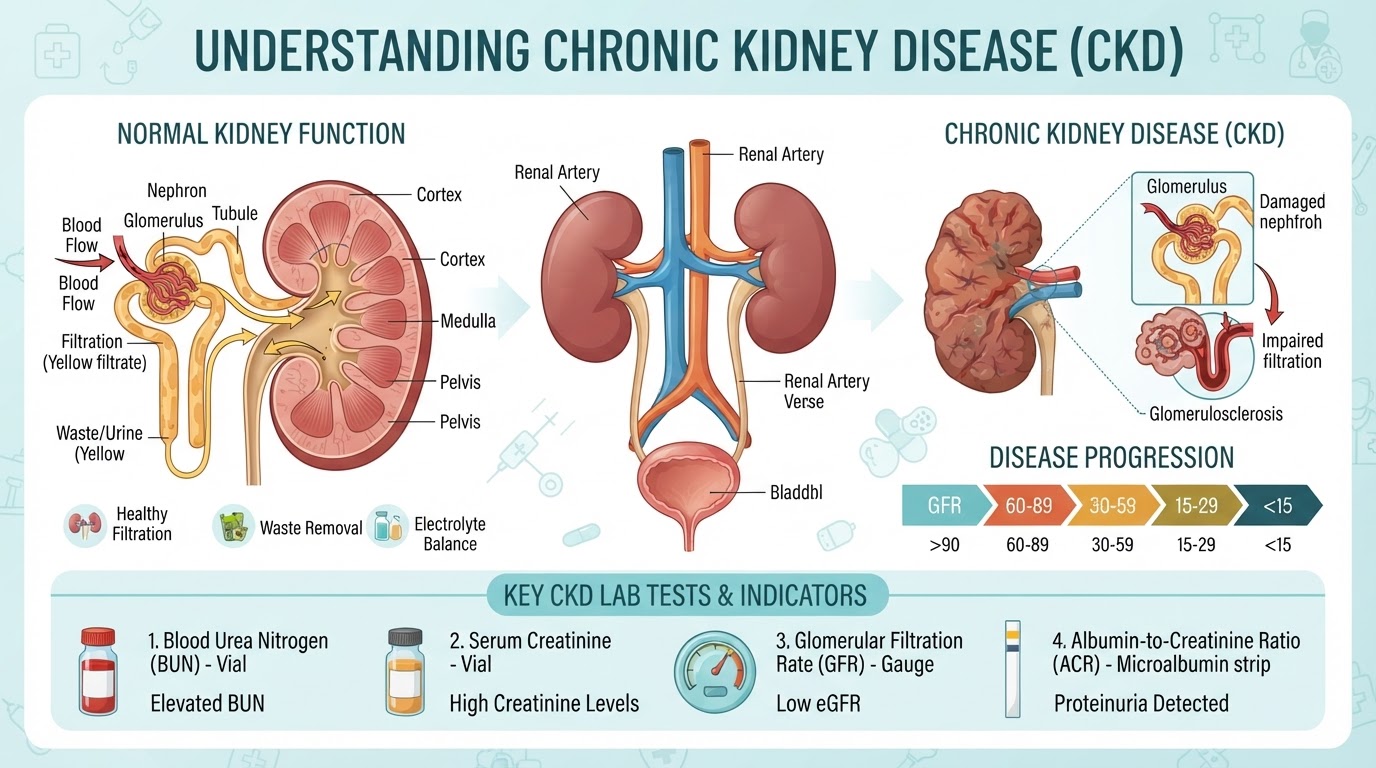
Chronic kidney disease (CKD) is a condition in which your kidneys gradually lose their ability to filter waste and excess fluid from your blood. Your kidneys are remarkable organs, filtering about 200 quarts of fluid every day to produce about 2 quarts of urine. When they are damaged, waste and fluid build up in your body, leading to serious health problems.
CKD is often called a "silent disease" because it typically has no symptoms in its early stages. In fact, many people don't know they have kidney disease until it has progressed to an advanced stage. An estimated 37 million Americans have chronic kidney disease, and most don't know it. Early detection through simple blood and urine tests can help identify CKD before it causes irreversible damage.
While chronic kidney disease cannot usually be reversed, its progression can be slowed significantly with proper medical care, lifestyle changes, and medication. Dr. Ddamulira provides comprehensive kidney health monitoring and management, working closely with nephrologists (kidney specialists) when specialized care is needed.
How Your Kidneys Work
To understand chronic kidney disease, it helps to understand what your kidneys do. Each kidney contains about a million tiny filtering units called nephrons. Each nephron includes a filter (glomerulus) and a tubule. As blood flows through the glomeruli, waste products and excess fluid are filtered out and sent to the tubule, which further processes the filtrate to create urine.
Your kidneys perform several vital functions:
- Filter waste: Remove waste products and toxins from your blood, including urea and creatinine.
- Regulate fluid balance: Maintain the right amount of water in your body by adjusting urine output.
- Control blood pressure: Produce hormones that help regulate blood pressure.
- Produce red blood cells: Release erythropoietin, a hormone that stimulates red blood cell production.
- Maintain bone health: Activate vitamin D, which helps your body absorb calcium for strong bones.
- Balance electrolytes: Regulate levels of sodium, potassium, calcium, and phosphorus in your blood.
When kidney function declines, all of these processes can be affected. This is why chronic kidney disease can cause such a wide range of symptoms and complications, from high blood pressure to anemia to bone disease.
Causes and Risk Factors
The two most common causes of chronic kidney disease are diabetes and high blood pressure, which together account for about two-thirds of all cases.
Diabetes and Kidney Disease
High blood sugar from diabetes damages the tiny blood vessels in your kidneys' filtering units. Over time, this damage reduces the kidneys' ability to filter waste. Diabetic kidney disease (diabetic nephropathy) is the leading cause of kidney failure. If you have diabetes, controlling your blood sugar is one of the most important things you can do to protect your kidneys.
High Blood Pressure and Kidney Disease
High blood pressure damages the blood vessels throughout your body, including those in your kidneys. As the vessels become damaged and narrowed, the kidneys receive less blood and oxygen, impairing their function. High blood pressure and kidney disease create a vicious cycle: kidney disease can cause high blood pressure, and high blood pressure worsens kidney disease. Controlling blood pressure is essential for slowing CKD progression.
Other Causes
- Glomerulonephritis: Inflammation of the kidney's filtering units, which can be caused by infections, autoimmune diseases, or other conditions.
- Polycystic kidney disease: A genetic disorder that causes fluid-filled cysts to form in the kidneys.
- Kidney stones and recurrent urinary tract infections: Can cause scarring and damage over time.
- Long-term use of certain medications: Including NSAIDs (ibuprofen, naproxen) and some antibiotics.
Risk Factors
- Diabetes
- High blood pressure
- Age 60 or older
- Family history of kidney disease
- African American, Hispanic, Native American, or Asian American heritage
- Obesity
- Smoking
- Cardiovascular disease
Stages of Chronic Kidney Disease
Chronic kidney disease is divided into five stages based on the glomerular filtration rate (GFR), a measure of how well your kidneys are filtering blood. GFR is calculated from a blood test that measures creatinine (a waste product) along with factors like age, sex, and body size.
- Stage 1 (GFR 90 or above): Kidney function is normal, but there are signs of kidney damage (such as protein in the urine). Treatment focuses on managing underlying conditions like diabetes and blood pressure.
- Stage 2 (GFR 60 to 89): Mildly reduced kidney function with signs of damage. Lifestyle changes and medication can help slow progression.
- Stage 3 (GFR 30 to 59): Moderately reduced kidney function. Stage 3 is divided into 3a (45 to 59) and 3b (30 to 44). Symptoms may begin to appear. Treatment becomes more intensive.
- Stage 4 (GFR 15 to 29): Severely reduced kidney function. Symptoms are more noticeable. Preparation for kidney replacement therapy (dialysis or transplant) should begin.
- Stage 5 (GFR below 15): Kidney failure, also called end-stage renal disease (ESRD). Dialysis or a kidney transplant is necessary to sustain life.
Early stages of CKD often have no symptoms. As the disease progresses, symptoms may include fatigue, swelling in the legs and ankles, changes in urination, nausea, loss of appetite, difficulty sleeping, muscle cramps, and itchy skin. By the time symptoms appear, significant kidney damage has usually already occurred, which is why regular screening is so important for people at risk.
Diagnosis and Screening
Chronic kidney disease is diagnosed through simple, routine tests that can be performed during a regular check-up with Dr. Ddamulira. If you have risk factors like diabetes, high blood pressure, or a family history of kidney disease, you should be screened at least annually.
Blood Test: Serum Creatinine and eGFR
A blood test measures the level of creatinine, a waste product that healthy kidneys filter from your blood. When kidney function declines, creatinine levels rise. The estimated glomerular filtration rate (eGFR) is calculated from your creatinine level along with your age, sex, and body size. Your eGFR tells Dr. Ddamulira which stage of kidney disease you are in and helps guide treatment decisions.
Urine Test: Albumin-to-Creatinine Ratio
A urine test checks for albumin, a type of protein that should not be present in significant amounts in your urine. When the kidney filters are damaged, albumin leaks into the urine. The albumin-to-creatinine ratio (ACR) is a sensitive marker of kidney damage and can detect kidney disease even before eGFR declines.
Imaging Tests
In some cases, Dr. Ddamulira may order an ultrasound or other imaging test to check the size and structure of your kidneys. This can help identify kidney stones, cysts, tumors, or structural abnormalities.
Who Should Be Screened?
- Anyone with diabetes
- Anyone with high blood pressure
- Anyone with a family history of kidney disease
- Adults aged 60 and older
- Anyone with cardiovascular disease
- People in high-risk ethnic groups
Managing Chronic Kidney Disease
While chronic kidney disease cannot usually be reversed, its progression can be slowed significantly with proper management. The goals of treatment are to preserve remaining kidney function, manage symptoms, prevent complications, and prepare for possible kidney replacement therapy if needed.
Blood Pressure Control
Controlling blood pressure is one of the most important steps in slowing CKD progression. The target blood pressure for people with CKD is typically less than 130/80 mm Hg. Dr. Ddamulira may prescribe medications called ACE inhibitors or ARBs, which not only lower blood pressure but also specifically protect the kidneys from further damage.
Blood Sugar Control
If you have diabetes, tight blood sugar control is essential for protecting your kidneys. Dr. Ddamulira will monitor your A1c levels and work with you to keep them within your target range. Some newer diabetes medications (SGLT2 inhibitors) have been shown to specifically protect kidney function.
Dietary Changes
- Reduce sodium: Limit salt to less than 2,300 mg per day to help control blood pressure and reduce fluid retention.
- Monitor protein intake: Too much protein can stress damaged kidneys. Dr. Ddamulira may recommend a moderate protein intake.
- Limit phosphorus: In advanced CKD, phosphorus can build up in the blood, weakening bones. Limit high-phosphorus foods like dairy, nuts, and colas.
- Watch potassium: In later stages of CKD, potassium levels can become dangerously high. Limit high-potassium foods like bananas, potatoes, and tomatoes if advised.
- Stay hydrated: Drink appropriate amounts of water, but don't overdo it if your kidney function is significantly reduced.
Medication Management
People with CKD often take multiple medications. It is essential to avoid medications that can further damage the kidneys, including NSAIDs (ibuprofen, naproxen). Always inform Dr. Ddamulira about all medications and supplements you take. Some medications may need dose adjustments based on your kidney function.
Preventing Chronic Kidney Disease
Whether you have risk factors for CKD or simply want to protect your kidney health, there are practical steps you can take:
- Control blood pressure and blood sugar: These are the two most important things you can do for your kidneys. Follow your treatment plan and keep all medical appointments.
- Maintain a healthy weight: Obesity increases the risk of diabetes and high blood pressure, both of which damage the kidneys.
- Exercise regularly: Physical activity helps control blood pressure, blood sugar, and weight.
- Eat a kidney-friendly diet: Focus on fruits, vegetables, whole grains, and lean proteins. Limit processed foods, salt, and added sugars.
- Quit smoking: Smoking damages blood vessels, including those in your kidneys, and accelerates CKD progression.
- Avoid excessive use of NSAIDs: Long-term or heavy use of over-the-counter pain medications like ibuprofen and naproxen can damage the kidneys. Use acetaminophen instead when possible, and talk to Dr. Ddamulira about pain management options.
- Stay hydrated: Drink enough water to help your kidneys function properly, but follow Dr. Ddamulira's guidance if you have reduced kidney function.
- Get regular check-ups: If you have risk factors, annual screening with blood and urine tests can detect CKD early, when treatment is most effective.
Your kidneys work tirelessly to keep you healthy. By taking proactive steps to protect them, you can reduce your risk of chronic kidney disease and its complications. If you have diabetes, high blood pressure, or other risk factors, schedule a kidney health screening with Dr. Ddamulira today. Early detection and management can make a profound difference in your long-term health and quality of life.
Need to discuss this with a doctor?
Dr. Ddamulira is accepting new patients in Avondale, AZ.
In this article
Expert Primary Care in Avondale
Don't ignore your health. Schedule a comprehensive evaluation with Dr. Marion Ddamulira today. We accept Medicare and most major insurances.
Related Articles
Browse All Health Tips Articles
Learn about the early warning signs, dietary adjustments, and how regular monitoring can help you live a full life with diabetes.

Small changes to your daily routine can make a massive difference in your cardiovascular health. Discover our top 5 evidence-based recommendations.

Why skipping your annual check-up could be costing you your health. Preventive care is the key to longevity and early detection.